EFT Tapping: What It Is, What the Science Says, and Why I'm About to Test It on Myself
If you've spent any time in coaching or therapeutic circles , you've probably heard of "tapping" — otherwise known as EFT, or Emotional Freedom Techniques. It involves physically tapping on a sequence of acupuncture points on the face and body while holding a specific problem, memory, or feeling in mind. It sounds a bit woo-woo, but the research behind it is interesting.
What it actually is
EFT combines two things at once: manual stimulation of acupoints (tapping, essentially), and a deliberate focus on the issue you're working with — a memory, a physical sensation, an emotion, a specific fear. The theory is that this combination helps interrupt the body's stress response while you're actively holding the difficult material in mind, rather than avoiding it.
Where it actually comes from
EFT is built directly on the meridian system from Traditional Chinese Medicine, the same map of energy channels that underpins acupuncture, acupressure, and the Chinese astrology I trained in myself. The specific points you tap in EFT are acupuncture points that have been mapped, named, and worked with for thousands of years.
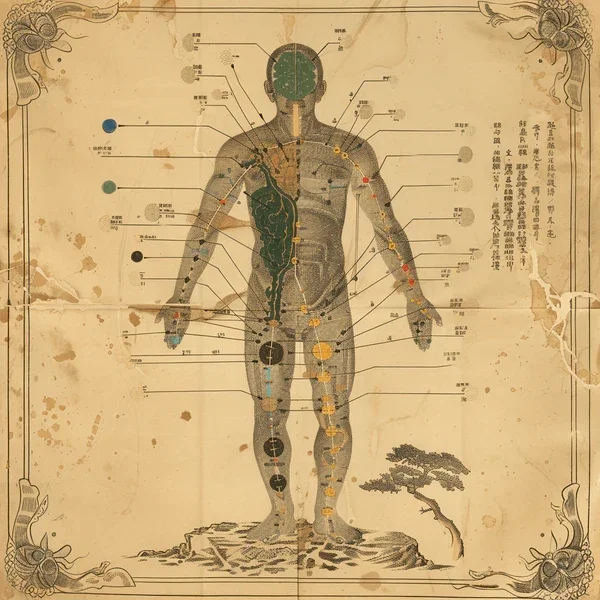
The 7 Chinese meridians
Over the last few decades, Western psychology and clinical research have begun to investigate ancient Eastern systems and started asking: does this measurably do what practitioners have long said it does? So the ‘evidence’ is modern Western science catching up to, and attempting to validate through its own methods, a system that Chinese medicine has worked with for millennia.
The evidence
A recent peer-reviewed review pulled together more than two decades of research — over 200 clinical trials, meta-analyses, and biomarker studies — to assess both whether EFT works and how it might work.
A few things stood out:
- The clinical results are strong and consistent. Meta-analyses (which sit at the top of the evidence hierarchy because they pool results across many trials) show EFT has a large treatment effect for anxiety, depression, and PTSD. It's met APA criteria as an effective treatment for phobias, anxiety, depression, and PTSD specifically.
- It's fast, and it seems to last. Trials repeatedly report unusually quick improvement, and that improvement tends to hold up over time rather than fading.
- some people I talked to suggested that it works because it distracts. but the tapping itself seems to matter, not just the talking.A large study of over 1,700 people used a single tapping session with minimal conversation and none of the usual EFT scripting — and still found support for the acupoint stimulation as an active ingredient, not just a delivery mechanism for talk therapy. That's an important distinction if we’re wondering whether this is "real" or just a relaxation method.
- There are measurable biological changes. One well-known study found a significant drop in salivary cortisol — the primary stress hormone — after a single EFT session, and the drop was considerably bigger than what supportive counselling or no treatment produced. Other research has found shifts in immune markers and gene expression associated with stress and emotional regulation.
- The mechanism is still being worked out. The working theory is that tapping generates signals that calm an overactive limbic system (the brain's emotional alarm centre) while the nervous system is given the chance to update the mental and physical patterns attached to the problem. It's an evolving field, and it's best thought of as a complementary tool that sits alongside other evidence-based approaches rather than as a replacement for them.
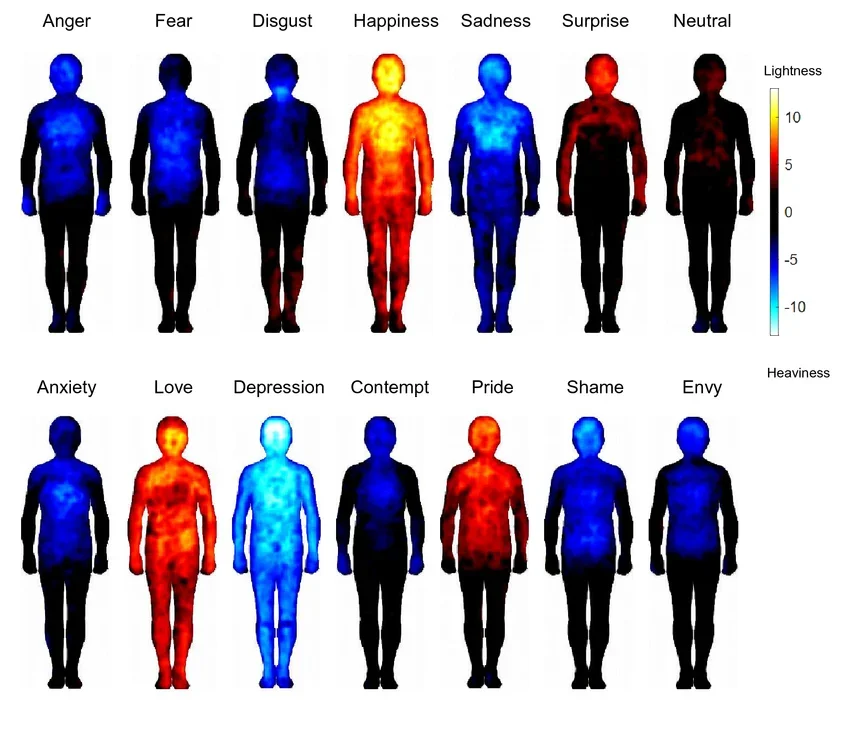
Bodily sensations maps https://www.pnas.org/doi/10.1073/pnas.1321664111
Why I'm looking into this properly
I've just completed my Foundation Day training in EFT, so I'm going to use myself as a case study — specifically working on my chronic back pain, which has been a long-standing, stubborn thing for me.
As others with chronic conditions will know, we meet the idea that a new method will actually work with scepticism and also a little apprehension - what if it did actually work???? We don’t want to dare to believe that any relief might be possible - the impact on mental health when we live with a chronic condition is real. I was told I should be on antidepressants alongside my opioids as a matter of course. I no longer take either, so this has real weight for me. So - I'm curious what happens when I apply this consistently and track it honestly: what shifts, what doesn't, how it feels in the body, whether the effects hold.
If there is an impact, I will go on and do the professional training - I can see a real alignment with the work we do in narrative coaching to shift old story ingrained habits and build fresh neural pathways that match our new story.
I'll keep you posted…!
---
Sources: this post draws on a 2025 peer-reviewed review published via Frontiers/PMC synthesising the clinical trial and biomarker research on EFT, alongside published meta-analyses of EFT for anxiety, depression, and PTSD. https://pmc.ncbi.nlm.nih.gov/articles/PMC12671046/